Chapter 4
The Minab School Attack: A Timeline of February 28, 2026
For the children of Minab, the morning of Saturday, February 28, began as a bright and joyful day. The sun was shining, and the new week had just begun. In Iran, Saturday is the first working day of the week, and the children were returning to school after a springlike weekend in late February, eager to see their friends again.
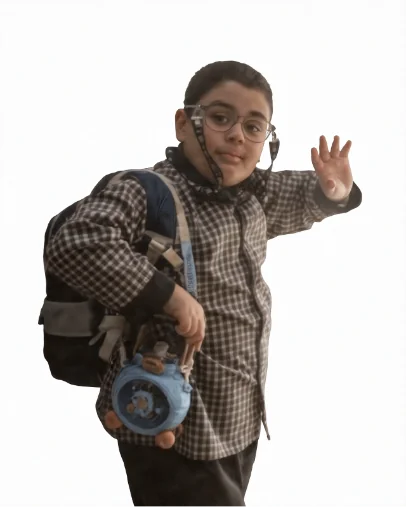
For example, Mikaeil Mirdoraghi stood by the door on his way to school, waved his hand, and asked his mother to take a photo of him. His mother, taking that picture with love, did not know that she was capturing the last photograph of her beloved child. Other children, too, began their day with excitement, carrying their school bags and their small hopes toward the classrooms where they expected only lessons, laughter, and friendship. No one knew what fate was waiting for them in the hours ahead.
In this chapter, we return to that tragic day. Through different accounts and memories, we try to look at the catastrophe from several angles: the morning of the attack, the confusion of the first explosions, the search among the rubble, and the unbearable moment when families understood that a normal school day had become a wound in history.
How the Attack Happened
At 9:40 a.m. on February 28, 2026, while negotiations with Iran were still underway, the United States and Israel launched a treacherous attack on the residence of Iran’s Supreme Leader and martyred the lawful and elected leader of Iran.
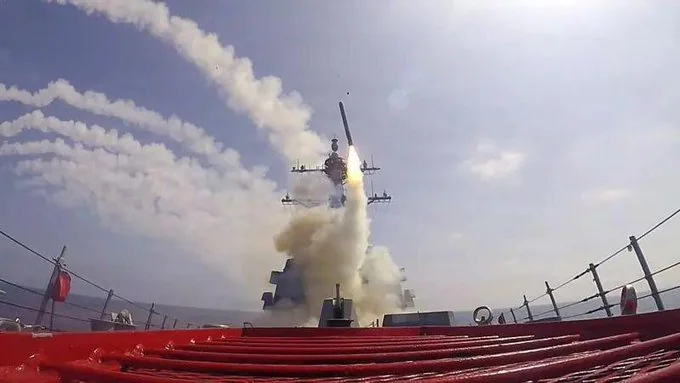
The attack came in the middle of diplomacy, when no one expected war to begin. Within minutes, missile strikes and air raids spread across the country. The shock was immediate, reaching ordinary families, schools, and children.
When the administrators of Minab School heard the news, they were stunned. Still, they quickly contacted the students’ families and asked them to pick up their children. Shocked parents arrived one after another, but the process took time.
Throughout those terrifying moments, the teachers and administrators stayed with the children and continued to protect and care for them.
At 10:21 AM, the first Tomahawk missile hit the store building next to the school. After 40 or 50 second another Tomahawk missile hit the school, a weapon the United States describes as precise, guided, and controllable. The attack followed the logic of what is known in modern warfare as a double-tap strike. In such attacks, the first strike hits a target, and a second strike follows after people move toward the scene: rescuers, parents, teachers, neighbors, and the wounded themselves. The purpose and effect of this method is to increase the number of casualties, not only among those first hit, but also among those who come to save them. In Minab, the first explosion was followed by another strike moments later. This meant that the place of injury became a place of further killing.
This method has appeared in other wars and has repeatedly raised grave legal and moral concerns because it turns rescue itself into a target. It punishes the human instinct to help. It waits for compassion to gather, and then strikes compassion too. In Minab, where children were under rubble and families were rushing toward the school, such a method cannot be separated from the result it produced: more death, more panic, and more terror among civilians.
Shajareh Tayyebeh School was located in Minab, in Hormozgan Province. There were 400 students (boys and girls) in this school. Investigations, verified images, satellite material, and reports from the site have all pointed to the same basic fact: the school was a civilian place of education. Yet when CENTCOM commander Admiral Brad Cooper was questioned in Congress by Representative Adam Smith, the ranking Democrat on the House Armed Services Committee, he refused to acknowledge U.S. responsibility and claimed “the school itself is located on an active IRGC cruise missile base,” making the investigation “more complex than the average strike.”
No convincing public evidence has been presented to support that claim. Smith did not accept the answer. He responded plainly: “I do not trust that answer”. More importantly, even if a military objective had existed somewhere nearby, international humanitarian law would still require constant care to spare civilians and civilian objects.
Article 57 of Additional Protocol I to the Geneva Conventions sets out the precautions required in attack. Those who plan or decide an attack must do everything feasible to verify that the target is not civilian and is not a protected civilian object. They must choose means and methods of attack that avoid, or at least minimize, civilian death and injury. They must refrain from launching an attack if the expected civilian harm would be excessive in relation to the concrete and direct military advantage anticipated. And if it becomes apparent that the target is civilian, protected, or that civilian harm will be excessive, the attack must be cancelled or suspended.
By any legal or moral standard, the attack on Shajareh Tayyebeh School stands condemned. A school full of children during school hours is an unmistakably civilian place; failing to verify that violated the duty of precaution, and knowingly striking it would make the crime darker still. No military language can erase the obvious reality: children were present, the danger to civilians was clear, and the ruins of that classroom cannot be excused as an error.
A Surviving Teacher’s Account of the Minab School Disaster
In this section, we will explore the day of tragedy from the early morning using the information that we have. This is a translation from Isna news Agancy.
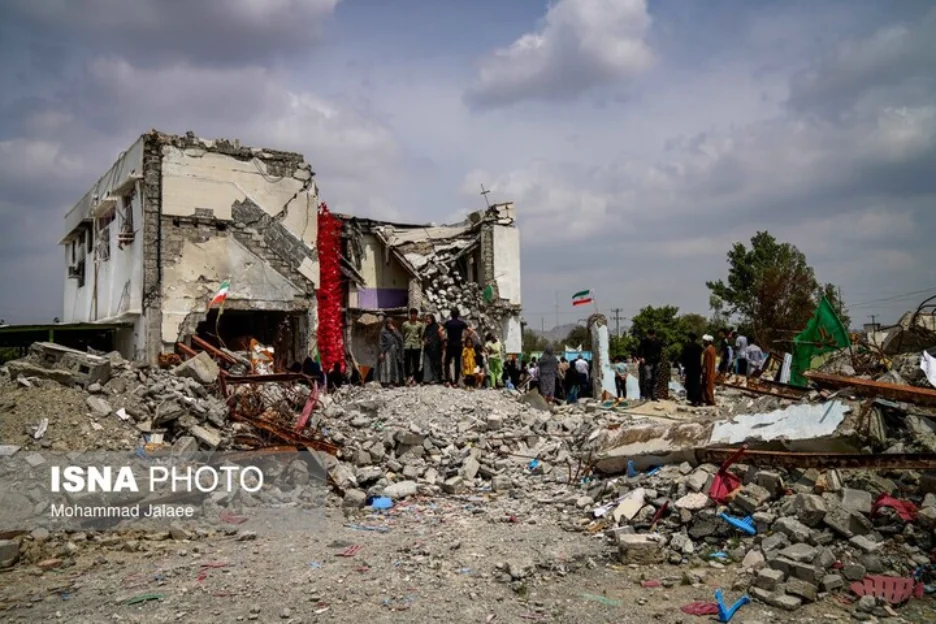
On Saturday, 28 February 2026, the Israeli-American attack turned Shajareh Tayyebeh School into a mound of dust and rubble. At the moment of the strike, 120 of its students were killed.
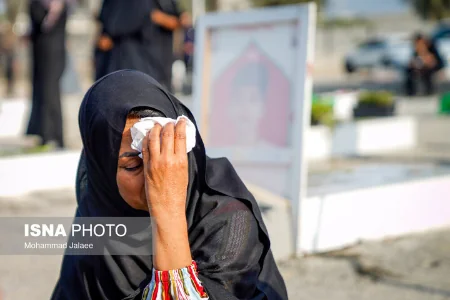 A fourth-grade teacher, one of the survivors, lost more students from her own classroom than any other class. She also lost her nephew. Now she becomes the narrator of the Minab tragedy and speaks about the day of the disaster.
According to ISNA, a teachers’ consultation meeting was supposed to be held that day. Samaneh Kamali arrived at school early in the morning, unaware that only a few hours later there would be neither a meeting nor a school. News of her aunt-in-law’s death caused her to leave the school, so she was not there at the moment of the attack.
Now, on Teacher’s Day, she speaks of the day when the children entrusted to her remained, one by one, beneath the rubble of the enemy’s attack. She returned to the school to help recover the bodies of the dead.
This is the account of a teacher who narrates the bitter mourning of a catastrophe through tears and grief.
A Fate That Did Not Wait
Kamali went to school on Saturday morning. The first period was Quran class, and the instructor was present in the classroom. Kamali, however, was in the kitchen area, preparing herself for the consultation meeting. She went back and forth to the office several times. She was not feeling well and wanted to cancel the meeting.
At first, the school deputy objected, but eventually agreed that the meeting could be postponed until the next day. Then, suddenly, she changed her mind and said the meeting should be held, because perhaps there would be no tomorrow.
Kamali had returned to the kitchen area to write down her notes when suddenly a message appeared on her phone: her aunt-in-law had passed away. Without informing the school staff, she picked up her car keys and left the school. Even her chador and personal belongings remained in the classroom.
The educational deputy asked her, “Where are you going?”
She answered: “I’m going until the children’s Quran class is over. I’ll come back.”
Kamali went to the hospital. At that same time, her colleague from the same grade called her and said she would teach the class in her place and that Kamali should not come to school that day.
“My colleague insisted a lot that I shouldn’t go,” Kamali says. “After the hospital, I started driving toward the school. When I got close, my colleague called again and said, ‘Samaneh, don’t come. I taught the math lesson. You rest today.’”
This time, Kamali turned back from near the school and went home.
The Student Who Survived Because He Overslept
Samaneh’s son was also a student at Shajareh Tayyebeh School. On the day of the tragedy, he overslept and did not go to school.
“His father said, ‘He doesn’t need to go to school today. I’m on the opposite shift from you, so let the child stay home.’ I put on my black clothes and went to my aunt-in-law’s house, which was near the school. Even at the ceremony, everyone was talking about the war. But I kept saying that the war would happen in Tehran, and that Minab would never become a war zone.”
It was around 10 in the morning when Samaneh’s brother-in-law wanted to go into the city. Samaneh drove him there, dropped him off, and returned to the mourning ceremony.
Her nephew was also a student at Shajareh Tayyebeh School. At 11 o’clock, she told her sister to go and pick up her son from school because, due to the situation, the school had been closed. But her sister said his father would bring him.
Samaneh says:
“Suddenly, there was a terrifying sound. It threw me across the house like a football. Pieces of the house were falling, and we didn’t understand what was happening. I got up to go out of the living room, and they said, ‘War has started. They are attacking.’”
She continues:
“I saw smoke rising, but I thought they had hit the clinic. People running along the road were all saying they had hit the clinic, the car wash, and the teachers’ halls. No one mentioned the school. I kept saying to myself, thank God, by this time all the children must have gone home.”
But the truth was something else.
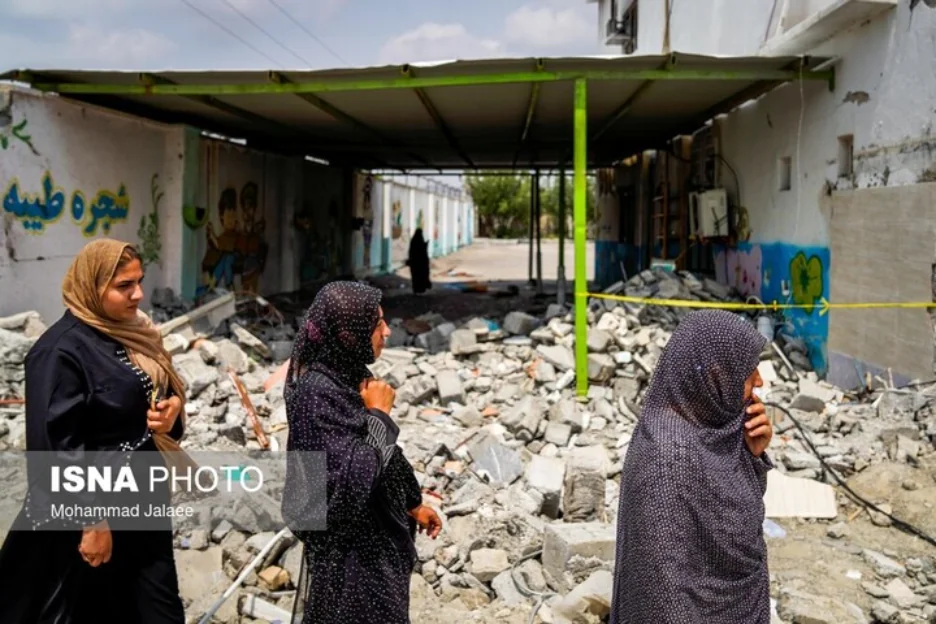
Three Explosions, and a Car Thrown Into the Air
The first explosion occurred at 11:22. The second explosion happened 25 seconds later. The third explosion happened when Samaneh had reached the front of the clinic. The blast wave lifted her car up and slammed it down, and the exhaust pipe burst.
Samaneh Kamali says:
“I don’t know how I drove all the way home. My sons were shaking with fear and thought there had been an earthquake. Everything was in chaos. The blast wave was so strong that all the household items had fallen onto the floor. I picked up the children, and we left the house. All the roads were blocked. There was a dirt road. I managed to get myself to the gas station. I still didn’t know they had hit the school. I had no idea. I only understood that they had hit the clinic and the car wash. People were saying the war had started and that they were going to strike all of Minab.”
The Phone Call That Brought the World Down on Me
She was standing in the gas station line when her phone rang. A man asked:
“Are you Mrs. Kamali? Where are you trapped under the rubble?”
“Rubble? What are you talking about?”
“Aren’t you a teacher at Shajareh School? Don’t you know?”
“What happened?”
“They hit the school. It has collapsed.”
Kamali describes those moments this way:
“At that moment, I felt terribly ill. I could not even understand whether I was standing on the ground. I screamed so much and beat myself on the head so hard that the people in the gas line opened the way for me to get the car out. A man gave me the gasoline from his own car. My children and my family were following me.”
Kamali went to the home of the school principal, Mrs. Taheri. There, she saw people gathered, beating their heads and crying. One of the students’ parents was the principal’s neighbor. When she saw Kamali, she hugged her and shouted:
“Thank God you are alive. Where is my Maryam? I gave her to you this morning as a trust. Tell me what happened to the school.”
As Kamali was crying, one of her friends came close, embraced her, and said:
“Samaneh, can you bear it if I tell you something?”
“Tell me. What happened?”
“Mrs. Taheri is gone. Your colleagues are gone. The children are gone. The whole school is gone.”
“At that moment, the world was spinning over my head. I was only screaming and crying. The streets leading to the school were blocked. There was no way for me to reach the school. Because I had small children with me, I couldn’t leave them in the car.”
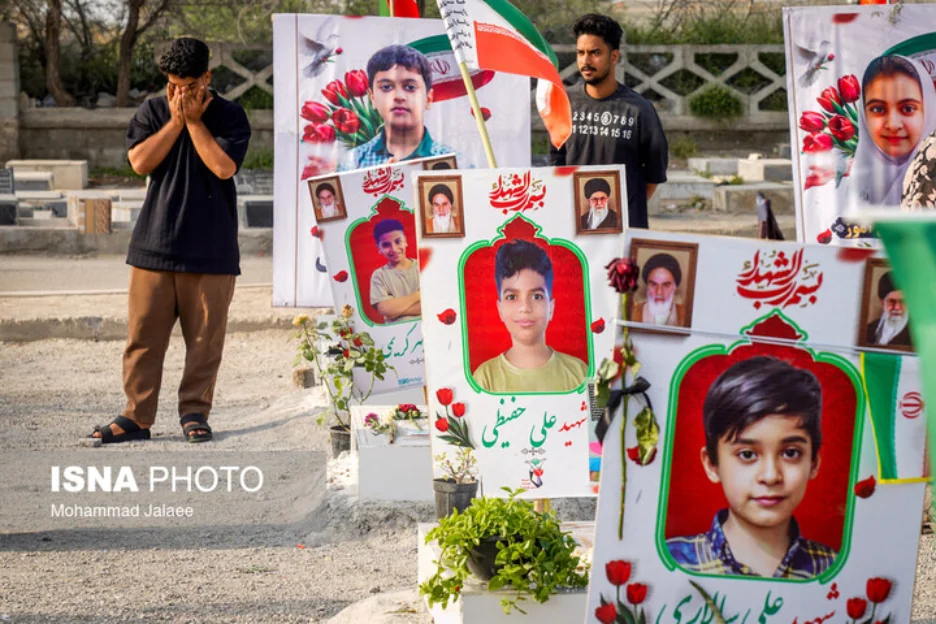
Karbala in Minab: Searching for Bodies Among the Rubble
Many relatives did not know that Kamali had not been at the school that day. They thought she and her student son had been trapped under the rubble, so they searched for them until nightfall. At that time, mobile phone signals had been completely cut off.
The antennas remained down until night. According to Kamali, the city had turned into “the desert of Karbala.” When the phones began working again, only the families of students called her. They kept asking:
“Where is my daughter? Where is my child?”
“People called me from everywhere you can imagine. I only answered the phone. I didn’t know what was happening. I didn’t know who was alive, who was there, and who was gone.”
At two or three in the morning, Kamali learned that her own nephew was also among the dead, and that no trace of his body had been found. Her brother-in-law, who had gone to the school to pick up his child, was also killed, along with the agency driver, by the second explosion as they were leaving the school.

The Minab teacher says:
“All our hope was that perhaps they were still under the rubble. There were rumors that some of the teachers were in the prayer room. When morning came, someone called us and said that a person had seen Amir Ali and his father in the schoolyard at the moment of the explosion, and that both had been killed. My brother went to the schoolyard and found Amir Ali’s father’s shoe.”
With tearful eyes, Kamali continues:
“They called me and said that if I could bear it, I should go to the school. The bodies were in pieces. Hands, feet, heads. It truly was Karbala.”
A Story of Sacrifice: The Teacher Who Shielded the Children
Amid this catastrophe, Kamali speaks of one teacher’s sacrifice:
“At the moment of the first explosion, the school’s physical education teacher sent several students downstairs. But she herself got trapped between the metal bars. She used her body as a shield for the children. A metal bar struck her back, and she was killed by a brain injury. But the student she had shielded survived.”
She continues:
“When they say a teacher is a second mother, it is true. The teachers could have saved themselves in that moment. The second explosion hit the school 25 seconds later. But the teachers chose to save the children before saving themselves.”
The Classroom That Will Never Be Complete Again
Shajareh Tayyebeh School was a two-story building. The boys were on the lower floor, and the girls were on the upper floor. Their courtyards were separate. It was a large complex, with a well-equipped clinic, a car wash, an auto repair shop, four teachers’ halls, a furniture-making center, and a home-appliance production area.
Kamali speaks about the number of students:
“The school included a preschool, a girls’ school, and a boys’ school, with a total of 403 students. Two hundred eighty-three students are alive, and 120 students, along with 26 members of the school staff, were killed. Only 10 members of the school staff survived. The other victims were parents who had come to pick up their children.
Forty-seven female students were killed. The highest number of student victims from one class belonged to my class. Ten of my students were killed. Four are safe, and one is injured with severe burns. Seventy-three male students were also killed.”
One of the people this chapter is about
