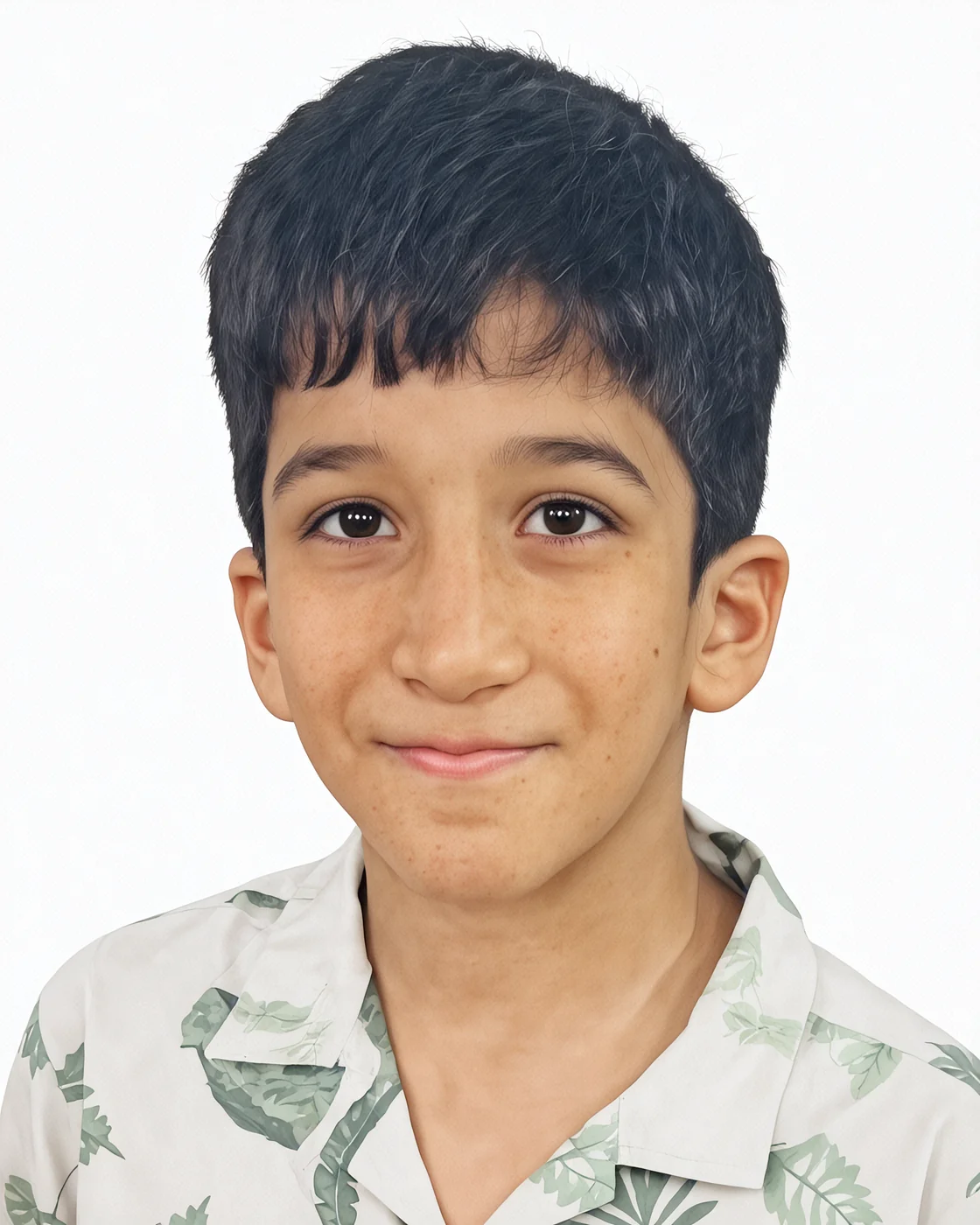
Parham Ranjbari was 9 years old and in second grade. His sister, one year older than him, studied at the same school.
On the day of the attack, the school called his father and told him to come and take Parham home. His father was in Bandar Abbas (100km away), so he called the school driver. The driver picked up Parham’s sister and took her home. But when he returned for Parham, the school had already been bombed.
Parham was later identified at the hospital. His father says his leg had been injured, and he had suffered a blow to the back of his head. The hospital, he remembers, was like Karbala.
Since that day, the family’s life has remained broken. Parham’s sister cries and says she wants her brother. His mother asks every day to be taken to him. Their home has become tied to the cemetery, because that is where Parham is now.
His father remembers him as a joyful child, always smiling, loved by relatives and friends. When guests came to the house, Parham would help with the work. He and his father used to go to the barbershop together. The barber remembered how his father would kiss him, and how his sister would proudly say, “This is my brother.”
Now that sentence remains, but the brother does not return.