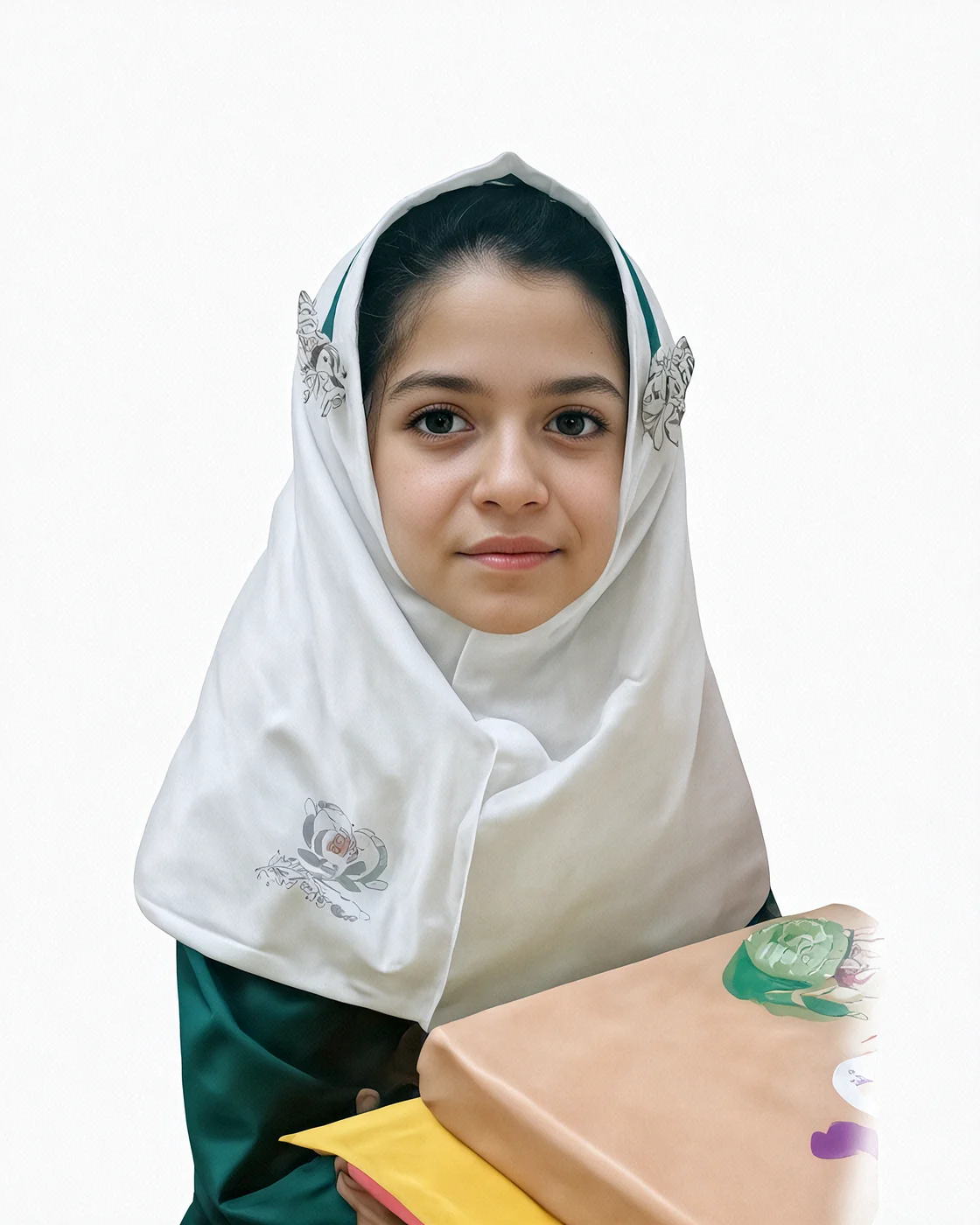
Mahdis Nazari was a first-grade student.
Two days before the tragedy, she returned from a trip to Qeshm Island. She had happily bought many toys there. Mahdis, who had only just begun learning to read and write, never found the chance to play with them.
Her father says that on the day of the attack, after the school called her mother, she got into the car and headed toward the school. But before she arrived, the school was struck.
With grief in his voice, he says that whenever they went to the seaside, Mahdis loved to play with the sand and build little hills. If it was possible, he says, she would place the Iranian flag on top of them.
He says his daughter was very brave and afraid of nothing. “Our hearts were deeply wounded by our daughter’s martyrdom.”
He also describes a scene that is hard to believe. While searching for the bodies, they cleared away the dust and rubble and found a teacher from the school holding two children in her arms—Mahdis and one of her classmates—as she tried to save them. All three had been martyred.
One video of Mahdis also remains. In it, she is reciting a Persian poem.
Mahdis’s story is the story of a child standing at the very beginning of life: new words, new notebooks, new toys, and small dreams still untouched. What remains now is a father’s grief, a child’s voice in a short video, and the image of a little girl held in the final embrace of a teacher who tried not to let her go.