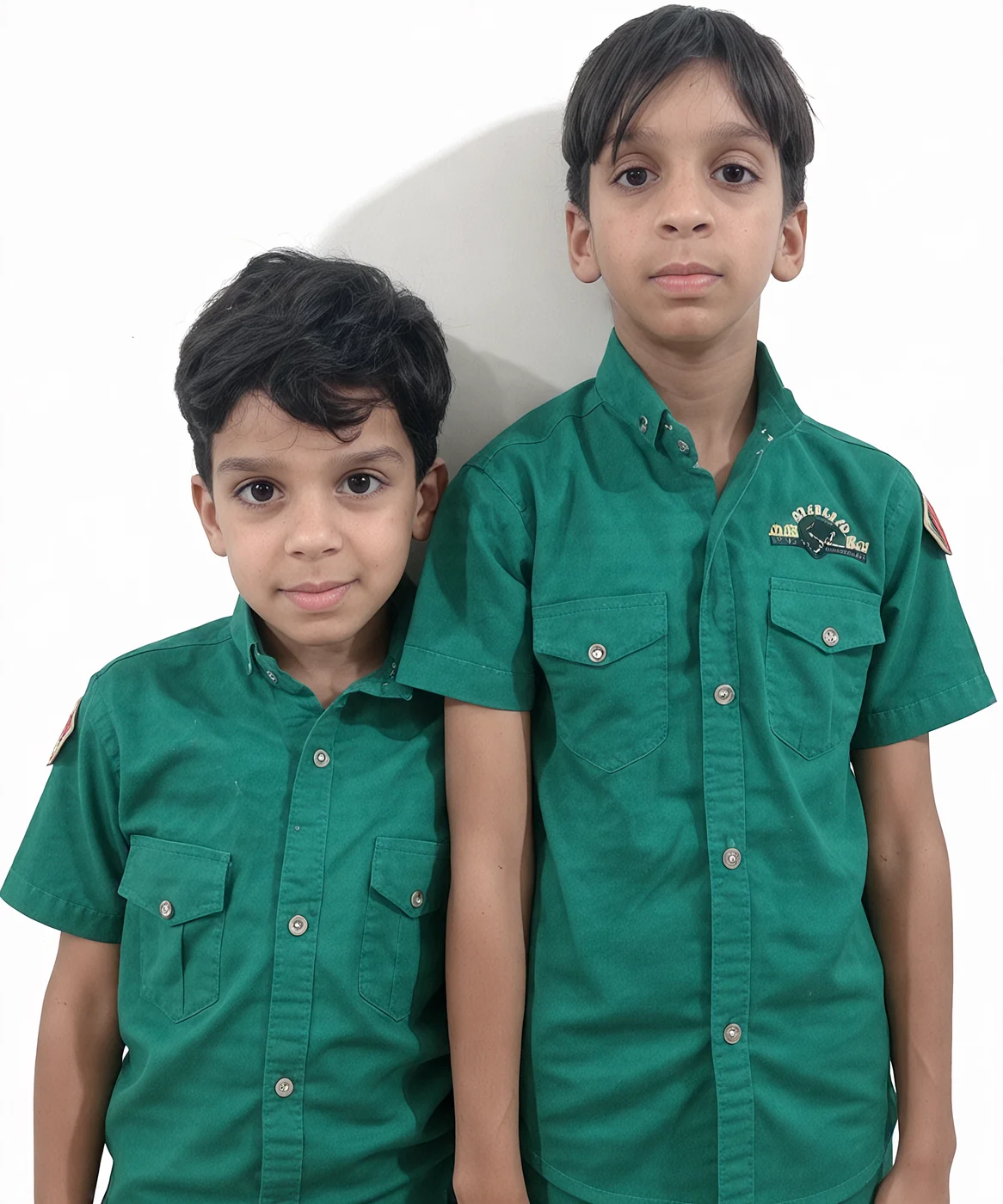
Hamed and Hani Paritaghinejad were two brothers. Hamed was in fourth grade, and Hani was in second grade.
Their father says, “The three of us were friends. We played Football and PlayStation together. The sound of them calling me ‘Baba’ will always remains in my ears.”
He says that, as usual, he made breakfast for them that morning and then took them to school. Around 11 o’clock, the school called and said that because of the war situation, families should come and take their children home.
“I was on my way when they hit the school,” he says.
With grief, their father remembers that only the day before, they had been out together from morning until night, enjoying their time. They were together moment by moment. It was always the three of them.
“Even now, when they come to me in my dreams, they come together,” he says. “After Hamed and Hani, life is no longer life for me. The scenes we saw at the school will never be erased from our minds.”
Their mother’s words after their martyrdom were not only words of grief. They were also a plea for the children who survived. She asked what share the children of Minab still had from happiness and play. The pain and fear left after such a catastrophe, she said, cannot be healed by stone walls alone. A wounded generation needs a place of joy.
Her wish was simple and heartbreaking: that a large amusement park be built for the children of Minab, a place filled with light, movement, laughter, and positive excitement. She believed that the souls of her dear Hani and Hamed, and all the student martyrs of the city, would be comforted if they could see their old playmates smiling again.
“Do not let the dream of having an amusement park be buried,” she said, “as the dreams of my children were buried.”
Hamed and Hani were taken from Minab, but their mother’s voice still asks for life: for the children who remain to be given back the right to laugh.