Chapter 2
When Civilian Deaths Are Called Mistakes
War has its own language of escape. When civilians die, the first words are often not children, families, homes, or schools. The first words are usually colder: error, misidentification, faulty intelligence, collateral damage, human shield, tragic mistake. These words do not raise the dead. But they often protect the living powerful polititions from responsibility.
This tragedy also stands in a longer record of civilian deaths: Iran Air Flight 655 with 290 killed in 1988, the Amiriyah shelter in Iraq with hundreds burned alive in 1991, and mass civilian deaths in Fallujah in 2004. The question is not whether the missile was accurate. The question is why a school was chosen at all.
The cases below are not identical. Each happened in a different war, under different commanders, with different weapons, and with different official explanations. But they share one painful pattern: civilians died, the first official language softened the act, and accountability came slowly, weakly, or not at all.
Honestly I wrote a lot more, but friends told me let’s focus on the main topic. If I want to write about American war crimes, it can be separated book.
Iran Air Flight 655, 1988
On 3 July 1988, the USS Vincennes, a U.S. Navy warship, shot down Iran Air Flight 655 over the Persian Gulf. All 290 people on board were killed, including children. The United States said the crew had mistaken the civilian Airbus A300 for a hostile Iranian F-14 fighter jet. Does anybody believe it? Is the Airbus A300 even similar to F-14? U.S. even did not formally admit legal liability. For Iranians, this remains one of the clearest examples of how a civilian disaster can be placed under the language of mistake while the full moral wound remains open. (Encyclopedia Britannica)
The Amiriyah Shelter Bombing, Iraq, 1991
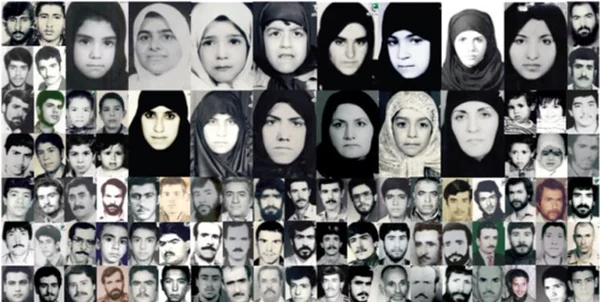
On 13 February 1991, during the Persian Gulf War, U.S. aircraft bombed the Amiriyah air-raid shelter in Baghdad. Human Rights Watch described it as the largest single incident of civilian death during the air campaign, with Iraqi reports giving figures between 200 and 300 civilians killed; other accounts put the number above 400. The U.S. claimed the shelter was being used as a military command-and-control center, while Human Rights Watch reported that the building was known locally as a civilian shelter and was being used by many civilians during the war. The official defense was therefore not “we hit civilians intentionally,” but rather “we believed the target was military.” That distinction did not save the people inside. (Human Rights Watch)
Lamerd, Iran, 2026
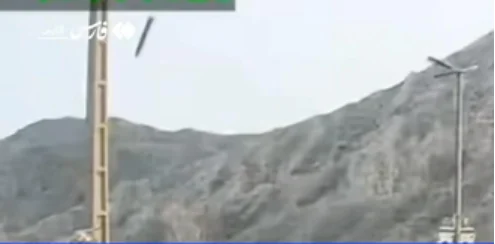
Even in the same war, Minab was not the only civilian tragedy. On 28 February 2026, shortly after the attack on the Minab school, another strike hit Lamerd in Fars province. Reports said the attack struck a sports hall, a school, and nearby residential areas, killing 21 people and injuring around 100. Weapons analysts and investigations identified the munition as likely a U.S.-made Precision Strike Missile, or PrSM, designed to explode above the ground and scatter lethal fragments. Like other war crimes done by U.S., CENTCOM denied U.S. responsibility and suggested the weapon was Iranian, but experts disputed that explanation, pointing to the missile’s appearance, airburst pattern, trajectory, and known PrSM features. Here again, the pattern was familiar: civilians were killed, responsibility was denied, and the burden of truth was pushed away from those who fired.
IRIS Dena, Indian Ocean, 2026
Again in the same war, the violence was not limited to Iranian soil. On 4 March 2026, the Iranian warship IRIS Dena was sunk by a U.S. submarine near Sri Lanka while returning from MILAN 2026, a multinational naval exercise hosted by India. (Press TV; Reuters) The ship was not attacking the United States at that moment, was far from the main battlefield, and was sailing back from a diplomatic naval event. Iran’s Army later confirmed 104 sailors killed and 32 wounded and rescued by Sri Lankan forces, with the remains of 20 crew members never recovered. (Press TV) The United States described the Dena as a military target, but that explanation does not answer the deeper moral question: why was a returning ship treated not as a vessel to be stopped, captured, or disabled, but as a target to be sunk? Even more disturbing were the questions after the strike. Sri Lankan forces carried out the rescue, while legal experts debated whether the U.S. had done enough to help survivors, as required by the laws of naval warfare. Later, Trump reportedly joked that sinking Iranian ships was “more fun” than capturing them. Such language reveals the cruelty behind the operation: when war becomes entertainment for those in power, the dead are no longer seen as human beings. In Dena, as in Minab, the pattern was the same: force was used first; humanity came later, and responsibility was buried under military vocabulary.
The Pattern
These incidents show that civilian death is not always an accident of war. Sometimes military power is used to break the spirit of a society: to create fear, empty homes, destroy villages, and make ordinary people feel surrounded. We see the same logic in Gaza, where entire city has been destroyed, and in southern Lebanon, where many villages have been heavily damaged or erased from normal life.
But this tactic has never truly worked. Fear may silence people for a moment, but it does not erase memory, identity, or resistance. A society under attack may suffer deeply, but suffering does not mean surrender.
That is why Minab cannot be reduced to a single official explanation. A school is not an invisible target. A classroom is not a battlefield. Children are not soldiers. When a primary school is struck, the burden of proof belongs not to the dead, but to those who fired the missile.
The language of war may try to soften the crime, but memory must restore the real words:
Not collateral damage.
Children.
Not a regrettable incident.
A school.
Not a mistake to be forgotten.
A wound that demands truth.
One of the people this chapter is about
