Chapter 3
The Tomahawk Was Guided: Why the Minab School Strike Wasn't a Mistake
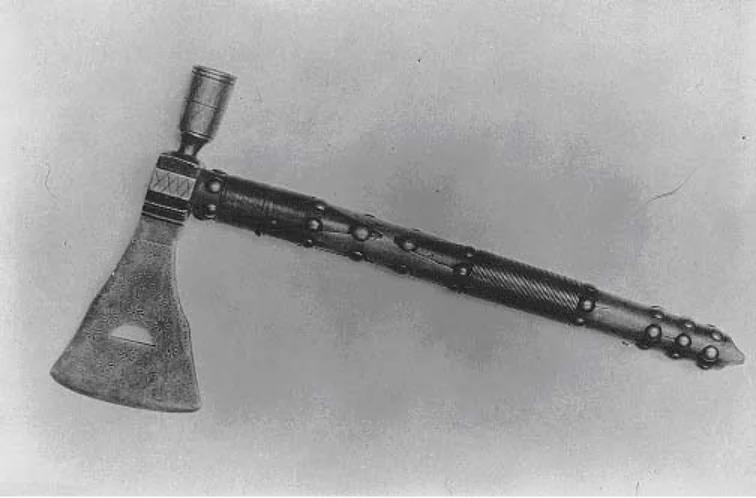
Americans used Tomahawk missile to attack Minab primary school. The name Tomahawk missile comes from the word tomahawk, a small axe or hatchet traditionally associated with the Indigenous peoples of North America. But this name is not a neutral detail. It carries a bitter historical irony. These were the same Native American peoples who were displaced, dispossessed, and repeatedly massacred by expansionist settlers, land-grabbers, and gold seekers who killed them in the path of conquest. To take a word from their culture and give it to a modern instrument of military destruction says more than it first appears to say. For people who look carefully, even the name of this missile carries many signs: of conquest, stolen memory, and the long shadow of violence hidden behind polished military language.
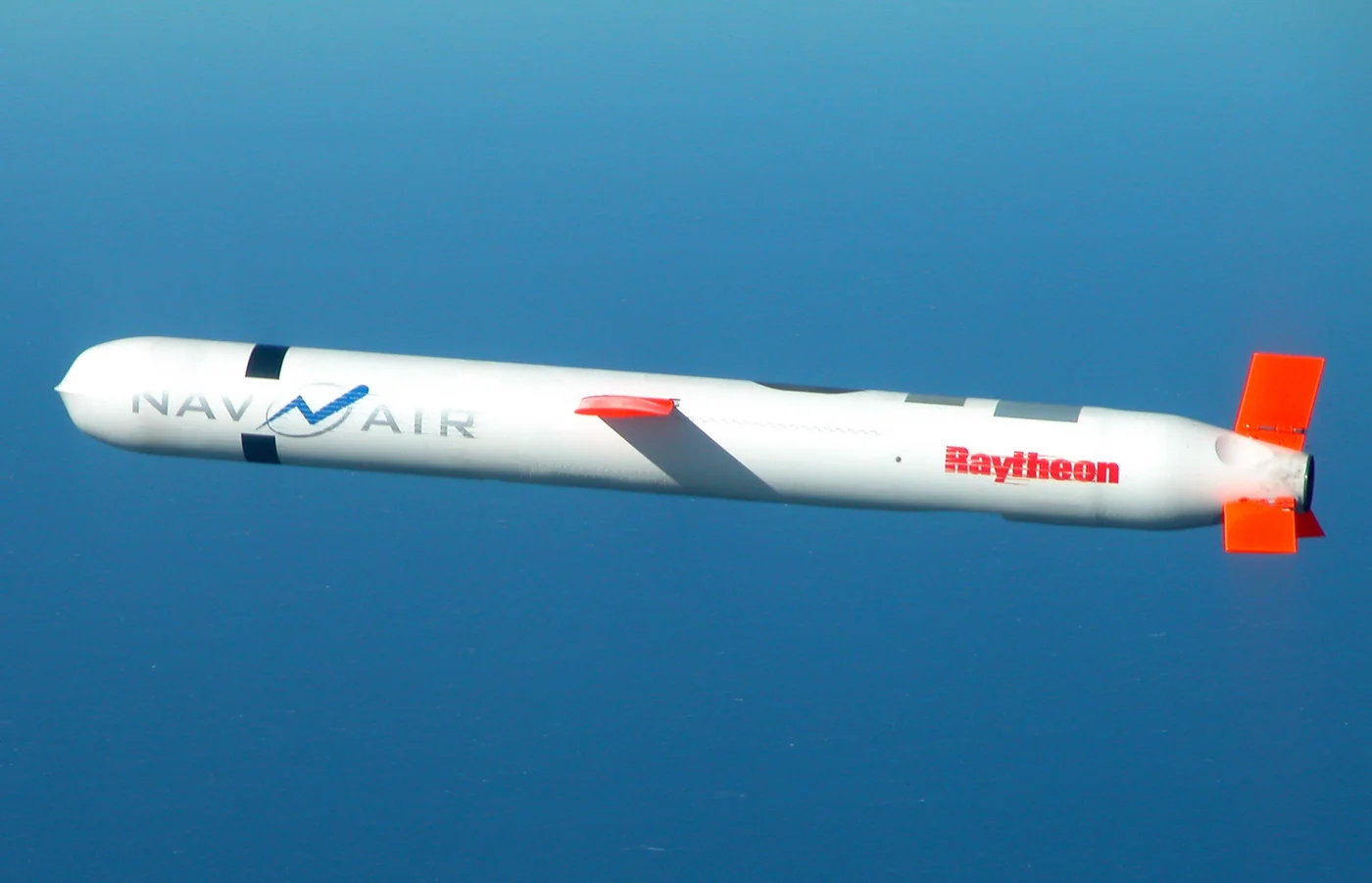
Tomahawk missiles are not blind weapons. The U.S. Navy describes the Tomahawk Block IV/V as a long-range precision cruise missile guided by INS, TERCOM, DSMAC, and GPS, with two-way satellite communications that allow officers to monitor it in flight, redirect it, change targets, loiter over the area, and use its onboard camera to send visual battle-damage information. This means commanders can track the missile until the final moments before impact. When a target is a primary school, marked by classrooms, painted walls, children’s drawings, playground features, and the clear shape of a school building, the claim of “mistake” demands serious scrutiny. In Minab, two Tomahawk missiles struck the school during school hours and killed 156 children and their teachers. Precision technology does not erase responsibility; it sharpens it.
The U.S. Navy’s own description is important because it does not present the Tomahawk as an uncontrolled weapon. It presents it as a long-range, all-weather, subsonic cruise missile used for deep land attack, launched from surface ships and submarines. It also states that Block IV can be reprogrammed in flight through two-way satellite communications, redirected to GPS target coordinates, and made to loiter over a target area. The Navy also says its onboard camera can provide battle-damage information to commanders. For Block IV/V, the Navy lists the guidance system as INS, TERCOM, DSMAC, and GPS. (U.S. Navy)
That matters morally. It matters legally. And it matters historically.
A weapon that can be redirected in flight cannot be discussed in the same way as a falling stone. A missile that can be guided by several navigation systems cannot be treated as if it wandered blindly across the sky. A strike system built for precision creates a higher duty of care, not a lower one. The more accurate the weapon claims to be, the heavier the burden becomes when it destroys a school.
The word “mistake” is sometimes used after civilian deaths as if it ends the question. But in a case like Minab, it should begin the question. If the missile was guided, who guided it? If the target was selected, who selected it? If the route was planned, who approved it? If the missile could be monitored, what was seen? If it could be redirected, why was it not redirected? If a school could be recognized from its shape, environment, and visible civilian features, why was it struck?
Technology itself does not answer these questions. But it prevents Americans from hiding behind ignorance too easily.
INS: Inertial Navigation System
INS, or Inertial Navigation System, is one of the missile’s core navigation methods. It works by measuring the missile’s movement after launch: its acceleration, direction, speed, and changes in position. In simple terms, INS allows the missile to “remember” where it started and calculate where it is going. It does not need constant external signals in the same way GPS does, which makes it useful if satellite signals are weak, jammed, or unavailable. In the Tomahawk, INS is part of a larger guidance architecture. It is not the whole brain of the missile, but it is one of the systems that keeps the missile on its intended path.
TERCOM: Terrain Contour Matching
TERCOM, or Terrain Contour Matching, helps a cruise missile navigate by comparing the land beneath it with stored terrain data. Before the missile is launched, mission planners can prepare a route using maps and terrain profiles. As the missile flies low over the ground, it reads the shape of the terrain below and compares that shape with the stored information. Mountains, valleys, coastlines, and changes in elevation become part of the missile’s navigation logic. This is one reason cruise missiles can fly at low altitude and follow complex routes. TERCOM is not a random movement. It is route-following based on prepared geographical knowledge.
DSMAC: Digital Scene Matching Area Correlation
DSMAC, or Digital Scene Matching Area Correlation, is a visual matching system. It compares what the missile sees with stored reference images of the target area. In simple language, DSMAC helps the missile recognize whether the scene below matches the expected scene. This is especially important near the final stage of flight, when accuracy matters most. If a target area has known buildings, roads, shapes, and visual patterns, DSMAC can help confirm the missile’s position. This makes the idea of a “blind” strike even harder to accept without investigation. A system that compares scenes is not merely flying toward a vague direction; it is checking the visual environment against prepared data.
GPS: Global Positioning System
GPS, or Global Positioning System, gives the missile satellite-based location data. It allows the weapon to navigate toward specific coordinates. In modern warfare, GPS is often associated with precision because it can guide weapons to a defined point on the earth. The U.S. Navy states that Block IV Tomahawks can be redirected to GPS target coordinates during flight through two-way satellite communications. This means the missile is not only launched toward a fixed destination and forgotten. At least according to the weapon’s described capability, commanders can update its target while it is already in the air. (U.S. Navy)
The Meaning of Precision
Precision is often presented as a moral improvement in warfare. Governments say that precision weapons reduce civilian casualties. They say modern guidance systems allow them to strike only military targets. They say these weapons are not like the old weapons of war, which fell over wide areas and killed without discrimination.
But precision has another meaning.
If a weapon is precise, then those who use it have fewer excuses. If a missile can be guided, corrected, redirected, and visually supported, then the destruction of a school cannot be brushed aside with vague language. It requires names, documents, orders, target files, flight data, communication records, and independent investigation.
A primary school is not a hidden bunker. It is not a moving armored vehicle. It is not a military command center disguised in the desert. A school has a civilian rhythm. Children enter it in the morning. Teachers stand before blackboards. Bags hang from small shoulders. Drawings are taped to walls. Playgrounds, classrooms, schoolyards, and children’s voices give the place its identity.
That is why the Minab attack is not only a tragedy. It is an accusation against the language of modern war.
The missile was not blind.
The children were visible.
The school was real.
And responsibility cannot be buried under the word “mistake.”
One of the people this chapter is about
