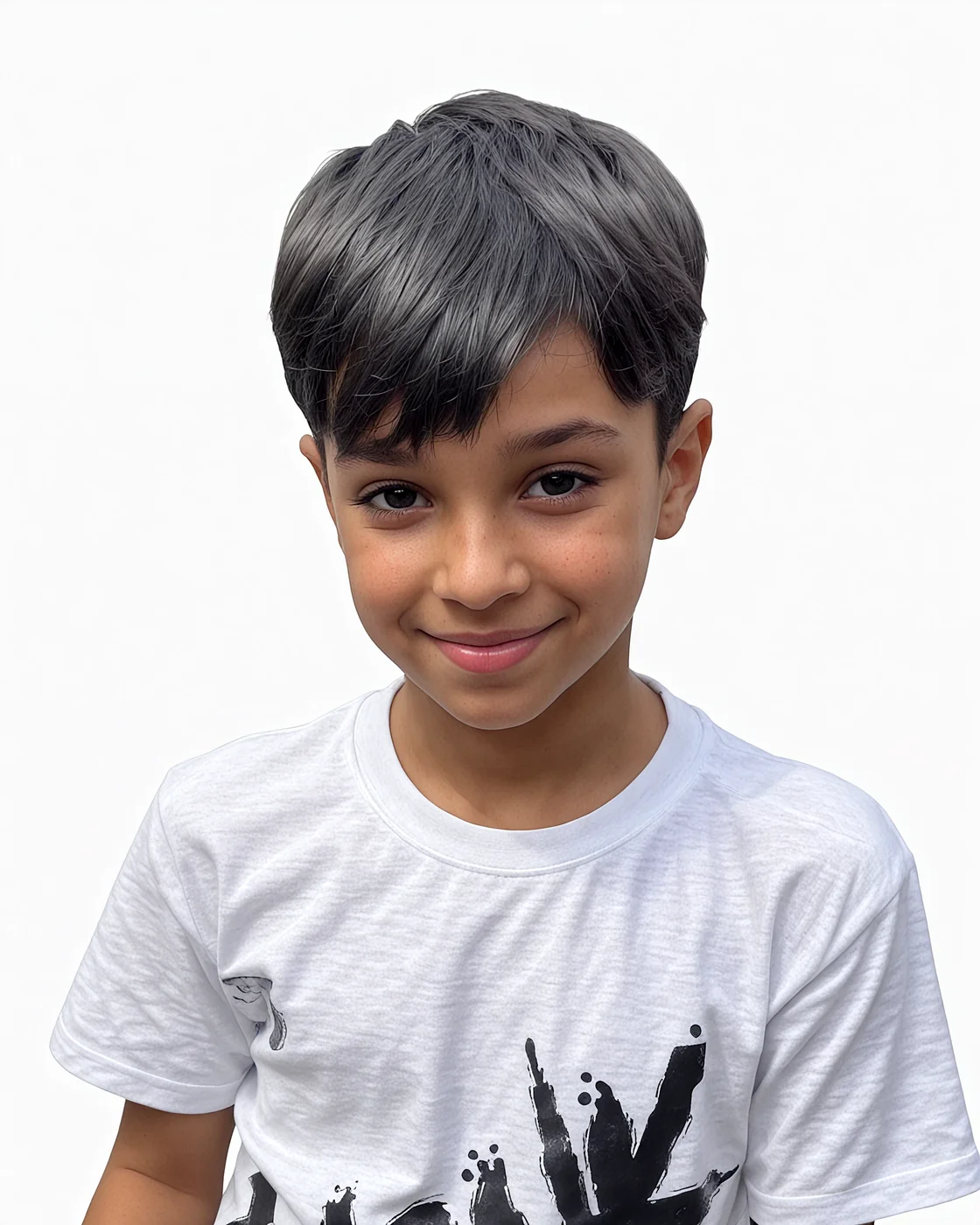
Saman Karamzadeh was a second-grade student.
Farzad Karamzadeh, the father of martyr Saman Karamzadeh, says:
“My son Saman was eight years old. He had studied at Shajareh Tayyebeh School since first grade and stayed there. He was a good and polite boy, and I miss him very much. He skated and loved studying.
One day before the tragedy, on Friday, we were together. My wife was at her mother’s house, and Saman stayed with me. He came to me and said, ‘Dad, today I am your guest.’
I said, ‘All right, my son. Today you are my guest, and we will be together.’
We spent the whole day together, and I bought him whatever he wanted that day. I will never forget the final moments of his life; the day my son was with me. We had such a good time together.”
Saman had told his father, “This Nowruz, take me to Mashhad by train.” He loved visiting Imam Reza’s shrine. The family usually traveled by plane, but Saman wanted to go by train. For him, the train was a dream, a simple childhood wish. But they never got the chance to take him, and now that wish remains a regret.
On the day of the attack, his father was in one of the towns near Minab.
“Around 11:20 in the morning, I received a call from a number I had not saved. It was one of the teachers at the school. All I heard was her voice… then there was a loud scream, and the line cut off. The screams of the children are still in my ears.
After the line was cut and I tried several times to call back without success, one of our relatives called me about four minutes later and said the school had been attacked. We rushed to the school.”
But the hardest moment for this father was searching for his son’s body among the burned and shrapnel-torn bodies.
He says:
“A few years earlier, Saman’s lip had been torn in an accident. The doctor had said, ‘He should grow older, and then we will operate on it.’
We were searching for his body. There, all the children’s faces were burned and covered with dust. We recognized Saman by that same lip, where the flesh had grown and left a mark.
That wound, which was once supposed to be repaired by surgery, became the only sign by which I found my son.”